The Stranger by Albert Camus: A Book Review
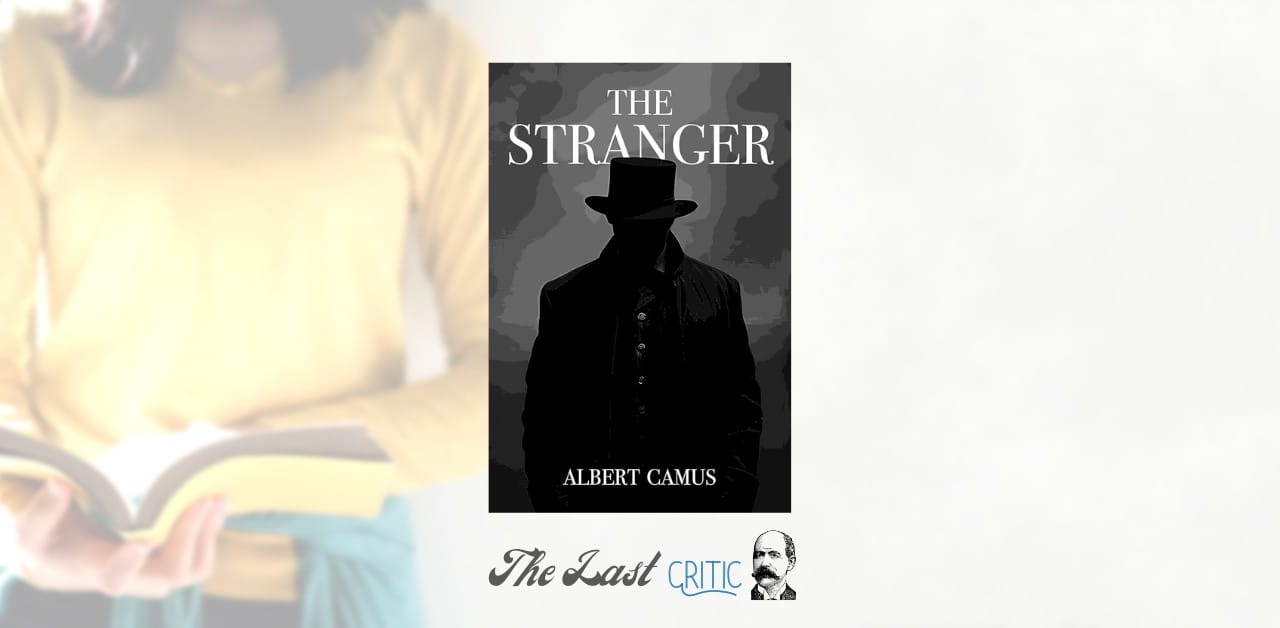
I have become a fan of works of literature that had compelling openers. Hardy’s lack of pace in opening lines, Austen’s hitting ones, Lawrence’s distinguished wordplay, and so many by so many… different styles have their own appeals. However, there are those novels that just kill you and raise you from the dead right away, right at the beginning of the journey. Albert Camus’s The Stranger (L’Étranger, 1942) opens with a line of devastating clarity: “Mother died today. Or, maybe, yesterday; I can’t be sure”. This dispassionate announcement announces not merely a death, but the arrival of a new kind of literary protagonist, one whose emotional disengagement constitutes a philosophical statement. In this seminal work, Camus crafts a narrative that functions simultaneously as a murder story, a courtroom drama, and a philosophical treatise on the absurd. The novella’s enduring power lies in its relentless interrogation of societal expectations, the nature of justice, and the possibility of authentic existence in an indifferent universe. Through the figure of Meursault, Camus presents a character who refuses to perform the emotional rituals society demands, and for this transgression, he is condemned, not for the murder he committed, but for his failure to weep.
The Absurd Hero as Stranger
The philosophical architecture of The Stranger is inseparable from Camus’s concept of the absurd, the irreconcilable tension between humanity’s search for meaning and the universe’s silent indifference. Meursault embodies this philosophical position not through intellectual argumentation but through lived experience. His celebrated indifference to his mother’s death, his matter-of-fact acceptance of his relationship with Marie, and his dispassionate commission of murder all reflect a worldview in which conventional moral categories have lost their purchase. As the prison chaplain discovers in the novel’s climactic confrontation, Meursault cannot be moved by appeals to divine justice or spiritual redemption: “I told him that I wasn’t conscious of any ‘sin’; all I knew was that I’d been guilty of a criminal offense”.
What distinguishes Meursault from the nihilistic tradition exemplified by Dostoevsky’s Raskolnikov is his complete absence of tortured self-justification. Whereas Raskolnikov theorises his crime in advance and subsequently suffers the torments of conscience, Meursault acts without premeditation and without remorse. The murder occurs not from ideological conviction but from sensory overload: “the cymbals of the sun clashing on my skull” and “the keen blade of light flashing up from the knife”. This physical causality, the sun as accomplice, underscores Camus’s insistence that human actions often elude the rational explanations society demands. In this respect, Meursault resembles the unnamed narrator of Kafka’s The Trial, who similarly confronts an incomprehensible legal system, though with far less equanimity. Yet where Kafka’s Joseph K. struggles desperately to understand his situation, Meursault accepts his fate with a serenity that is both chilling and liberating.
Colonial Silence and Imperial Justice
A crucial dimension of The Stranger that has received renewed critical attention is its colonial setting. The novel unfolds in French Algeria, a context that shapes the very possibility of the narrative. The murdered Arab, whose death precipitates Meursault’s trial, is never named, a textual silence that reflects the colonial hierarchy in which Arab lives register as peripheral, almost incidental. As one scholar observes, “The trial of Meursault, apparently about the murder of an Arab, who was rendered silent and nameless, becomes a theatre of colonial power, where the imperial justice system enforces ‘moral conformity’ while maintaining racial violence”. This insight illuminates the profound irony of the trial: Meursault is condemned not for extinguishing an Arab life, but for failing to demonstrate appropriate grief at his mother’s funeral. The colonial justice system, in other words, reveals its true priorities when it treats emotional conformity as a graver offence than the killing of a colonised subject.
Camus’s own complicated position on Algerian independence, he advocated for a peaceful resolution that would preserve the French presence, adds another layer of complexity to this reading. Nevertheless, the novel’s textual structure implicitly critiques the colonial order by exposing its moral foundations as contingent and self-serving. The courtroom scene, in which Meursault’s character is dissected by prosecutor and defence attorney alike, suggests that justice in this context functions as a mechanism for enforcing social norms rather than for determining truth.
The Displacement of Essence
The novel’s two-part structure enacts a movement from existence to essence, from lived experience to social categorisation. Part One presents Meursault immersed in the sensory immediacy of life: the heat of the sun, the taste of coffee, the texture of Marie’s dress, the salt spray of the sea. This is existence in its raw, unmediated form. Part Two subjects this existence to interpretation, as the legal system transforms Meursault’s actions into a coherent narrative of criminality. The distinction between existence and essence, the freedom of human beings versus the thinglike nature of objects and stereotypes, was central to existentialist thought, and Camus employs it to devastating effect. Meursault cannot explain himself to the court because explanation requires a self that is stable, coherent, and legible to others, precisely what he lacks.
The prosecutor’s speech crystallises this dynamic when he declares that Meursault possesses “no soul, nothing human about him”. The charge is not that Meursault killed a man, but that he cannot be understood within the categories society provides. This might be compared to the trial of Smerdyakov in Dostoevsky’s The Brothers Karamazov, or indeed to any courtroom drama in which character becomes the true subject of judgment. Yet Camus’s innovation lies in refusing to provide the reader with a secret key to Meursault’s psychology. He remains inscrutable, not because he is complex in the manner of a Dostoevskian hero, but because he is simple, and society cannot forgive simplicity.
Acceptance and Affirmation
The novel’s final pages offer a resolution that is paradoxically liberating. Meursault, facing execution, refuses the chaplain’s attempts to console him with religious hope. In a passage of extraordinary power, he embraces the absurdity that has defined his existence:
“It was as if that great rush of anger had washed me clean, emptied me of hope, and, gazing up at the dark sky spangled with its signs and stars, for the first time, the first, I laid my heart open to the benign indifference of the universe”.
This acceptance is not nihilistic resignation but active affirmation. Meursault achieves what Camus, in The Myth of Sisyphus, identifies as the absurd hero’s triumph: recognising the meaninglessness of existence and choosing to live anyway. Sisyphus, rolling his boulder eternally, “is stronger than his rock” because he accepts his fate without illusion. Meursault’s final wish, that on the day of his execution “there should be a huge crowd of spectators and that they should greet me with howls of execration,” suggests that he has discovered a form of freedom in his condemnation. The society that has rejected him cannot touch the authenticity he has achieved.
Conclusion
In the end, Albert Camus’ The Stranger still stands as a landmark of twentieth-century literature, not because it offers convenient answers, but because it refuses to offer false ones. Camus’ spare prose, his controlled narrative, and his refusal to sentimentalise his protagonist all serve a philosophical vision that remains unsettling. Meursault is neither hero nor villain; he is simply a man who does not play the game. For this, he is condemned. The novel’s continuing relevance lies in its challenge to readers: to consider whether authenticity is possible in a world that demands performance, and whether the price of honesty may be death itself. The work forces us to confront the uncomfortable possibility that society’s judgment is less concerned with the objective facts of a crime than with the criminal’s subjective character. Meursault is executed not because he killed a man, but because he did not mourn his mother in the prescribed manner. This is the novel’s ultimate indictment, an indictment not of Meursault but of the society that cannot tolerate a man who refuses to pretend.
Get a copy from Amazon India – click here.
Review by Anand for The Last Critic
The Stranger by Albert Camus: A Book Review
- TLC Rating
5
Summary
A classic among those who love reading slow, tormentingly meaningful and trying literature.