Autism Causes Unveiled by Dinesh Danny, a book review
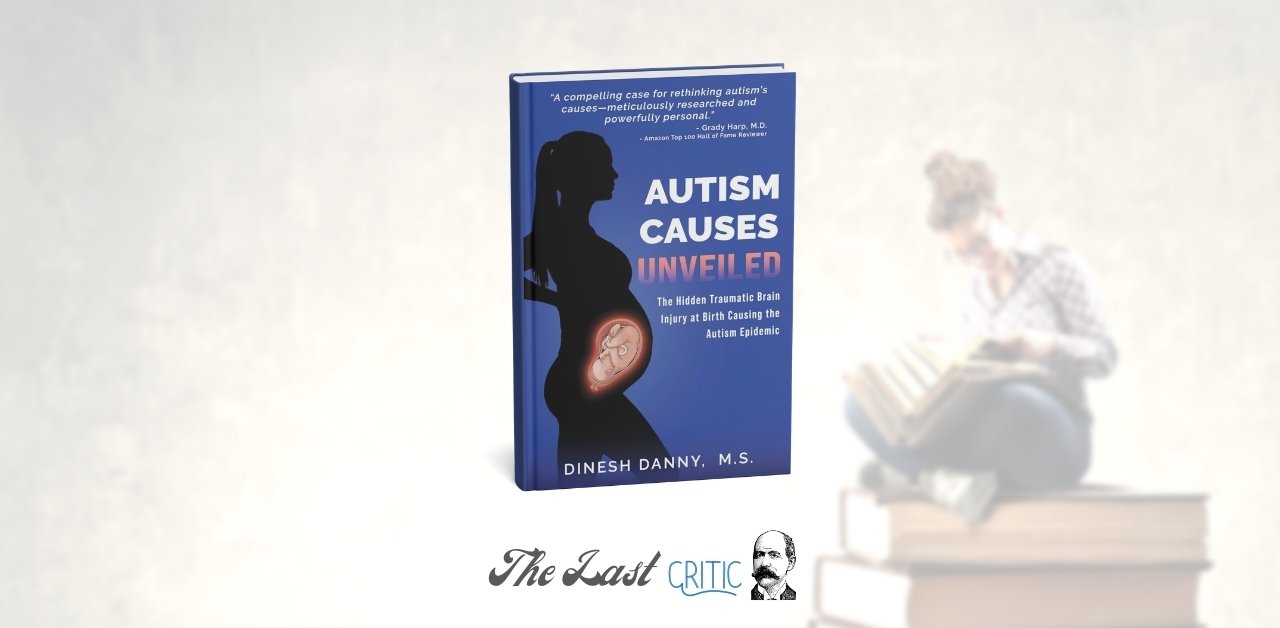
Dinesh Danny’s Autism Causes Unveiled: The Hidden Traumatic Brain Injury at Birth Causing the Autism Epidemic is not the kind of book one usually encounters in the field of autism literature. Most books on autism fall into predictable patterns. Some are written by medical researchers and focus on genetics, neurology, or clinical therapy. Others are memoirs by parents or individuals on the spectrum describing the lived experience of autism. Danny’s book sits somewhere between these two worlds. It is part investigation, part personal story, and part challenge to the dominant explanations about autism that have shaped the conversation for the last few decades. What makes it interesting is that it does not begin with abstract theory or clinical terminology. It begins with a father trying to understand what happened to his children.
From the opening pages, it becomes clear that the author’s motivation is deeply personal. He recalls the early years of his family life and the gradual realisation that something about his sons’ development was different. He writes with disarming honesty about that moment when the diagnosis arrived: “Evaluations confirmed our fears: autism. We hoped our second son would be spared, but at age three, he too was given the dreaded diagnosis.” That line alone captures the emotional core of the book. Danny does not attempt to present himself as a detached observer. Instead, he writes from the perspective of someone whose life has been directly altered by the condition he seeks to understand. In another passage, he describes the impact of those diagnoses on the family, noting that “like numerous other parents whose children are diagnosed with autism, our lives were turned upside down.” These moments give the book a human centre that many technical books on autism simply lack.
Yet the book does not remain a memoir for long. After describing the family’s experience, Danny begins asking the question that drives the entire narrative: What actually causes autism? The most common answer offered by the medical community in recent decades has been genetics. Numerous studies have suggested that autism arises from complex interactions between multiple genes and environmental influences. This view has shaped much of the modern literature on the subject. Books such as Steve Silberman’s NeuroTribes examine the historical development of autism research and emphasise how genetic explanations gradually became dominant. Temple Grandin’s writings, on the other hand, focus less on causation and more on how autistic individuals experience the world. Danny’s book enters this conversation from a very different angle. Instead of concentrating on genetic inheritance or cognitive experience, he returns to the moment of birth and asks whether events during labour might play a far larger role in autism than researchers currently acknowledge.
The turning point in the author’s investigation comes when an MRI scan reveals signs of possible brain injury. That discovery leads him to reconsider the entire birth process and the medical procedures used during labour. From that point onward, the book develops a central claim that traumatic brain injury during childbirth may be responsible for many autism cases. Danny suggests that factors such as oxygen deprivation or intense physical pressure on the infant’s brain could disrupt the delicate neural networks responsible for communication and social behaviour. He argues that modern obstetric practices may sometimes create conditions where such injuries occur. His argument is expressed quite bluntly in one passage where he writes that “the overwhelming majority of cases of autism are the result of medical mistakes causing hypoxic or traumatic brain injury during birth.” Whether readers ultimately agree with this conclusion or not, there is no doubt that the author states his case with clarity and conviction.
One reason the book remains readable despite its ambitious claims is the way Danny explains complex neurological ideas. Instead of assuming that readers already understand neuroscience, he spends time describing how the brain develops in early life. He explains how neurons connect to form networks, how grey matter and white matter function, and how communication between brain regions allows humans to develop language and social awareness. At one point, he reminds readers that “the human brain is the most complex and least understood of human organs.” This observation becomes an important foundation for his argument. If the brain is so complex and fragile, he suggests, then it is reasonable to examine whether physical stress during birth might disrupt its development. His explanations are usually presented in straightforward language that avoids the dense terminology often found in medical textbooks. For readers unfamiliar with neuroscience, these chapters provide a useful introduction to how the brain grows and why early injury might have lasting consequences.
The book also emphasises how rapidly the brain develops during childhood. Danny notes that the earliest years of life are a critical period when neural connections form at an extraordinary rate. Because of this, he argues that any damage occurring at birth could interfere with the development of these networks. He summarises the idea clearly when he writes that “brain development occurs in stages… any damage to the brain at birth means subsequent development is significantly hindered.” The logic of this statement is easy to understand even for readers without scientific training. If the brain is building its communication pathways during infancy, then injury at that moment could affect the entire structure that develops afterwards.
At the same time, the book does not avoid controversial territory. Danny openly challenges the prevailing emphasis on genetics within autism research. He suggests that the focus on genetic explanations may have diverted attention away from birth-related injuries. In his words, researchers have created “an elaborate web of diversions that obscure the truth regarding the causes of autism.” Such statements reveal the confrontational tone that occasionally appears in the book. The author clearly believes that important evidence has been overlooked or ignored. Critics will undoubtedly argue that his conclusions extend beyond the available data, and it is fair to say that the book sometimes moves from correlation to causation more quickly than many scientists would accept.
Nevertheless, the questions he raises are not trivial. Birth complications, oxygen deprivation, and neurological trauma are already recognised risk factors for developmental disorders. Danny’s contribution lies in insisting that these factors deserve far more attention in the study of autism.
Another issue addressed in the book is the complicated debate surrounding vaccines. Rather than claiming that vaccines directly cause autism, Danny proposes that vaccination might interact with pre-existing brain injury. He suggests that if a child already has neurological damage from birth trauma, the immune response triggered by certain vaccines could potentially worsen the condition. He tries to position himself between extreme viewpoints by explaining that he is neither entirely for nor against vaccination, but instead is interested in understanding how different biological factors might interact. This middle position may still provoke disagreement, yet the author attempts to frame the discussion as part of a broader investigation rather than a political argument.
Perhaps the most distinctive feature of Autism Causes Unveiled is its tone. Despite the serious subject matter, the book rarely feels like an academic treatise. Danny writes in a conversational style that often resembles a father explaining his discoveries to other parents. He avoids the kind of technical language that dominates many scientific texts and instead walks readers through his reasoning step by step. This approach makes the book accessible to a wide audience, especially readers who might otherwise find medical literature intimidating. At the same time, the presence of personal experience gives the narrative emotional weight. The reader never forgets that the investigation began with two children and a family searching for answers.
This mixture of memoir and investigation is what ultimately distinguishes Danny’s work from many other books on autism. While researchers such as Silberman provide historical context and clinicians offer therapeutic guidance, Danny focuses on the origin of the condition itself. He asks uncomfortable questions about childbirth practices, medical protocols, and the possibility that preventable factors may be involved. Whether one accepts his conclusions or remains sceptical, the book succeeds in provoking thought. It encourages readers to examine the assumptions that shape modern autism research and to consider whether other explanations deserve closer scrutiny.
In the end, Autism Causes Unveiled should not be approached as a definitive solution to the mystery of autism. Instead, it functions as a passionate and sometimes controversial inquiry into a subject that affects millions of families. The author’s arguments will undoubtedly be debated, and many scientists will challenge his interpretation of the evidence. Yet the book accomplishes something important simply by bringing a deeply human perspective into a discussion often dominated by clinical statistics and specialised terminology. Danny writes not as a detached researcher but as someone whose life was “turned upside down” by an autism diagnosis. That perspective gives the book its urgency and its emotional authenticity. Even readers who disagree with the author’s conclusions may appreciate the determination behind his search for answers.
You can get a copy from Amazon India – click here to get one now!
Review by Rahul by The Last Critic
Autism Causes Unveiled by Dinesh Danny, a book review
- The Last Critic Non-fiction Rating
- Narrative, Persuasiveness, Facts, Scientific Claims
4.5
Summary
Dinesh writes with a purpose. His purpose is to ignite a debate on autism and its aspects. And for most parts, he succeeds in getting the attention of readers. A must-read book on this subject, to be precise!